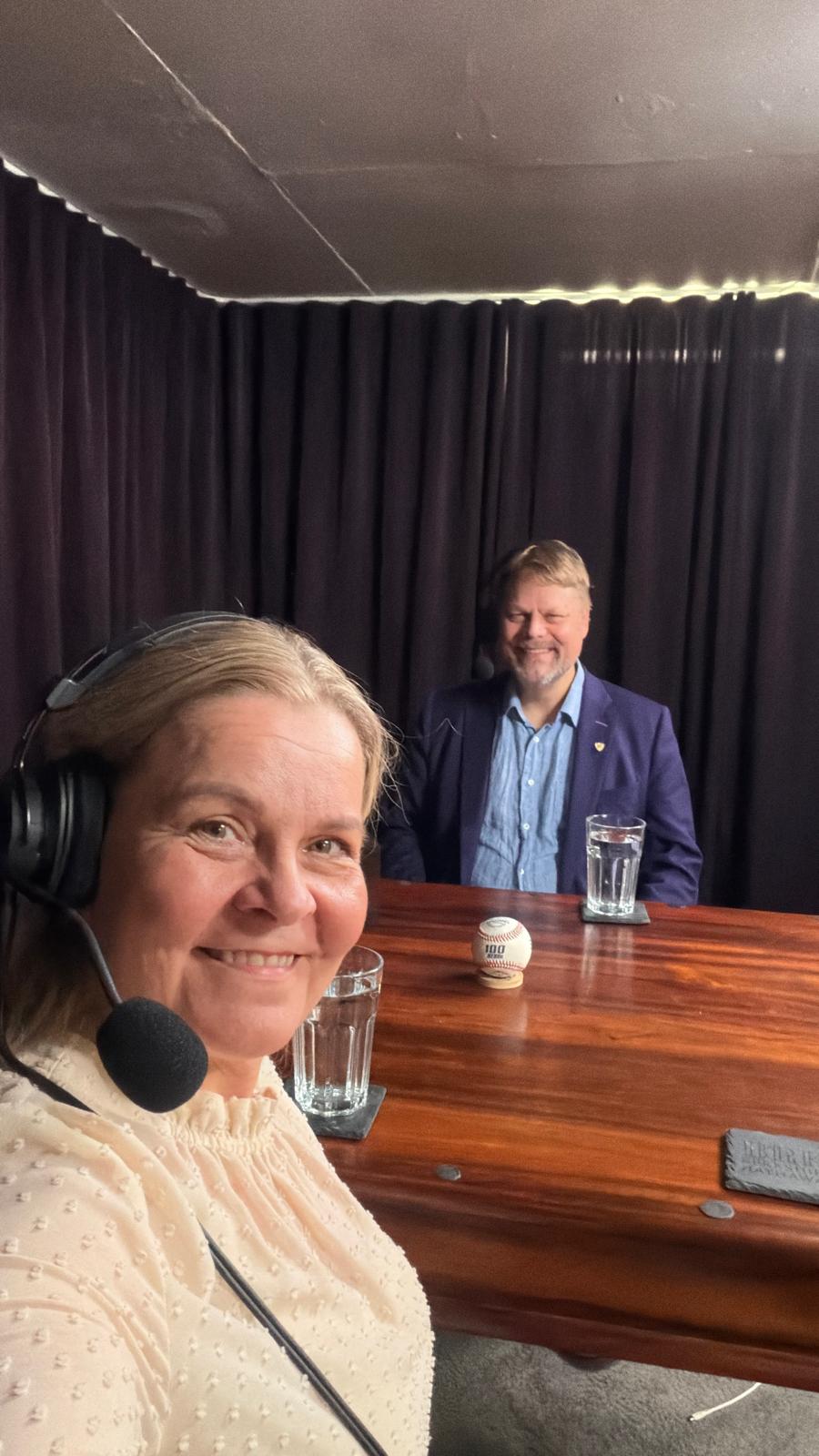
I had the pleasure of attending a show hosted by Sami Miettinen In the Negotiator Podcast (Episode 409: Billions are spinning in Excel). In our discussion, we delved into a topic that touches on the entire Finnish infrastructure and construction sector as well as the public sector: how tens of billions of data volumes and multi-year projects are still being managed manually using Excel spreadsheets, memos, and PDF files.
My background in reinforced concrete construction and the day-to-day work of construction sites has taught me how demanding and critical quality assurance and administrative management are. Based on the podcast discussion, I want to highlight three key perspectives on leveraging artificial intelligence and agile development.
1. Agile development is also suitable for large organizations and the public sector
In the public sector and in large enterprises, development projects are often perceived as cumbersome, multi-year, and expensive IT projects. However, the rules of the game have changed.
Modern artificial intelligence tools and agile experiments show that the complex nodes of administration, quality assurance, and support functions can be solved quickly and in stages. Even in large organizations, it is not necessary to wait for years for massive system reforms – routines and data flows can be improved immediately, safely, and in a flexible manner.
This brings enormous savings and efficiency to public procurement, RDI projects, and day-to-day operations at the agency level.
2. Bridget App – Example of modernization of management and quality assurance
The preparation and life cycle of road and rail design can take 5–20 years. During this time, the legislation, EU regulations, and key personnel change, and the design information becomes fragmented across different systems and Excel files.
Bridget App It is a practical example of how such a huge amount of data is gathered in one place and quality assurance is automated using artificial intelligence. It replaces manual Excel wrangling, clarifies the situation, and saves significant national economic resources.
We are happy to act as a sparring partner and partner for organizations that want to bring agile development and automation into their own operations – whether they are clients, design firms, or infrastructure contractors.
3. Construction and infrastructure contractors: Streamline management and support functions
For contractors, field work and actual construction are bread and butter, but administration, work site meeting notes, quality inspections, and reporting often take up a disproportionately large amount of time and energy.
Rapid coding and artificial intelligence tools (such as Lovable) makes developing administrative and support functions incredibly easy. Before building even a small routine-simplifying app, an IT specialist and an expensive budget were required. Today, a contractor can quickly build or implement tools and automations that are suitable for their own site, eliminating the manual paper war and the hassle of running Excel spreadsheets.
When routines are automated, time is saved for managing the work site itself and achieving results.
Where will I meet you during October-November 2026?
Face-to-face discussions are the best way to explore how agile methods and artificial intelligence can be applied in your organization’s daily operations. I will be available during the autumn for the following events (click on the links to learn more about the programs):
- On Wednesdays mornings from 9 to 10: Drop-in at the Lahti Science Park (Niemi Works, Käkikelloaula, Niemenkatu 73, Lahti)
- Until 1.10.2026: Hankinta-Suomen Syysseminaari (Ministry of Finance, Restaurant Töölö, Helsinki)
- Thursday 6.10.2026: Maria 01, Helsinki (Networking and Community Day)
- Tue 13.10.2026 from 2:00 PM to 4:00 PM: RekryPoint Lahti (LUT University, M19 campus, Community room D246)
- Tue 27.10.2026 from 9:00 to 10:00: Artificial intelligence in the workplace event (Lahden Science Park, Käkikello Aula, Nexpert × Spark Team)
- Monday 16.11.2026: AI Summit 2026
- Until 19.11.2026: SLUSH 2026
Watch the interview from the Negotiator podcast
In the episode, we discuss with Sami Miettinen in more detail artificial intelligence agents, the boundaries between the public and private sectors, developments in the infrastructure sector, and entrepreneurship:
If you wish, we can practice on the automation of management and quality assurance
Would you like to discuss how artificial intelligence and agile tools can work in your organization’s scale? Book a short time for a discussion directly in my calendar:
Filed under