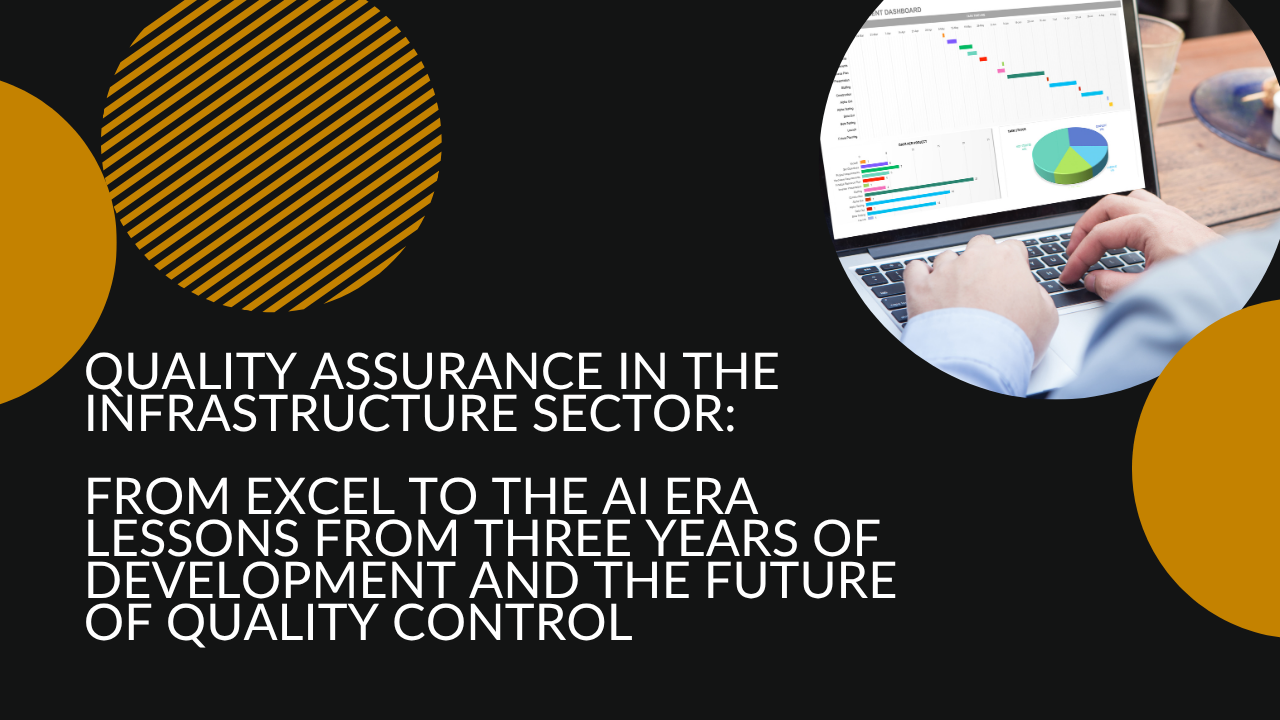
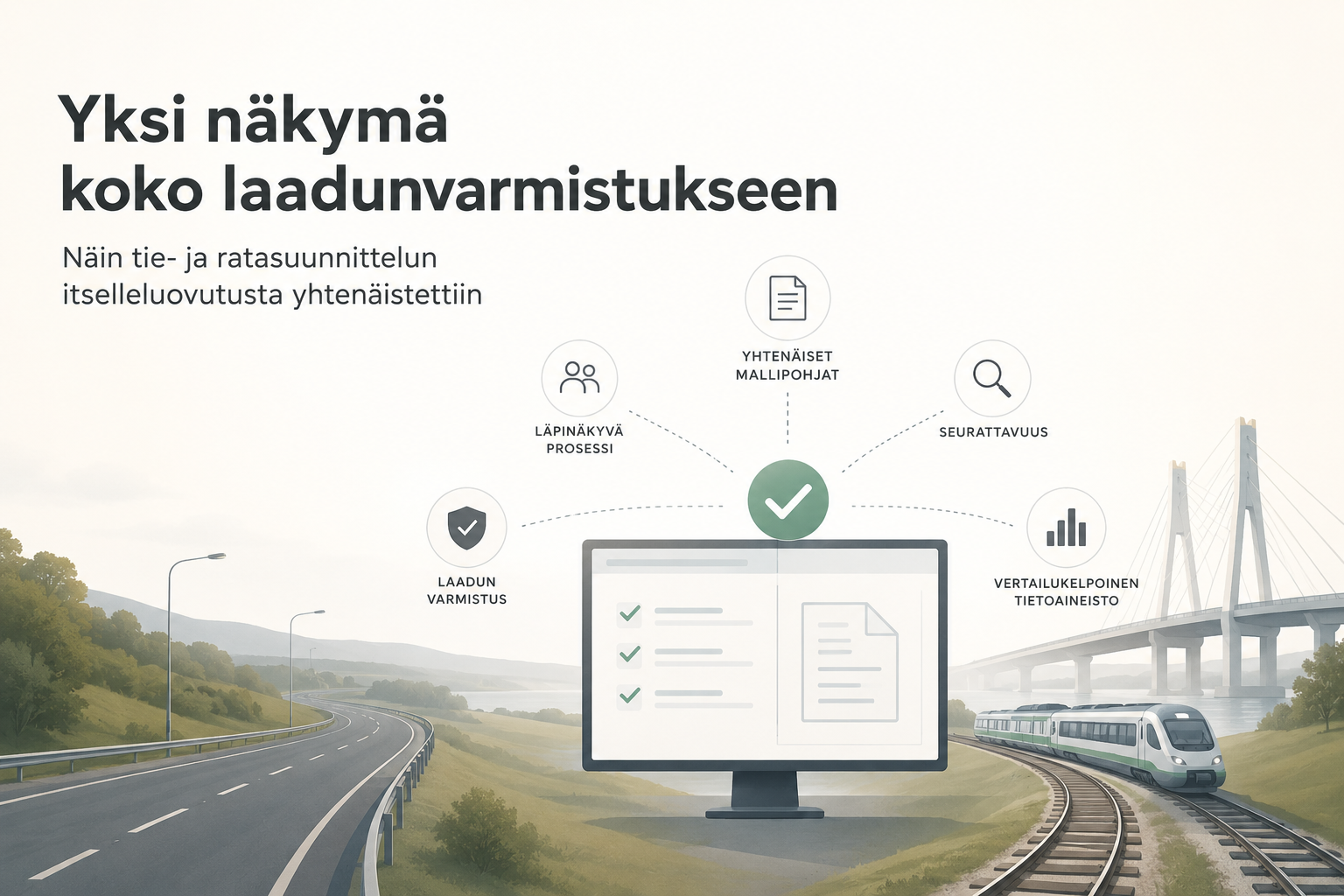
Illustration of a unified quality assurance process for road and rail design, showing a digital checklist dashboard connected to standardized templates, process transparency, traceability, comparable data, and quality control.

Tag: information management

  • One View for the Entire Quality Assurance Process

    One View for the Entire Quality Assurance Process

    This is how the self-delivery of road and railway design was standardized Tanja Karonen Road and railway design is a long, multi-stage, and strictly regulated process. The design is guided by EU regulation, national legislation, the Finnish Transport Infrastructure Agency's Technical...

  • Digital twins supporting decision-making

    Digital twins supporting decision-making

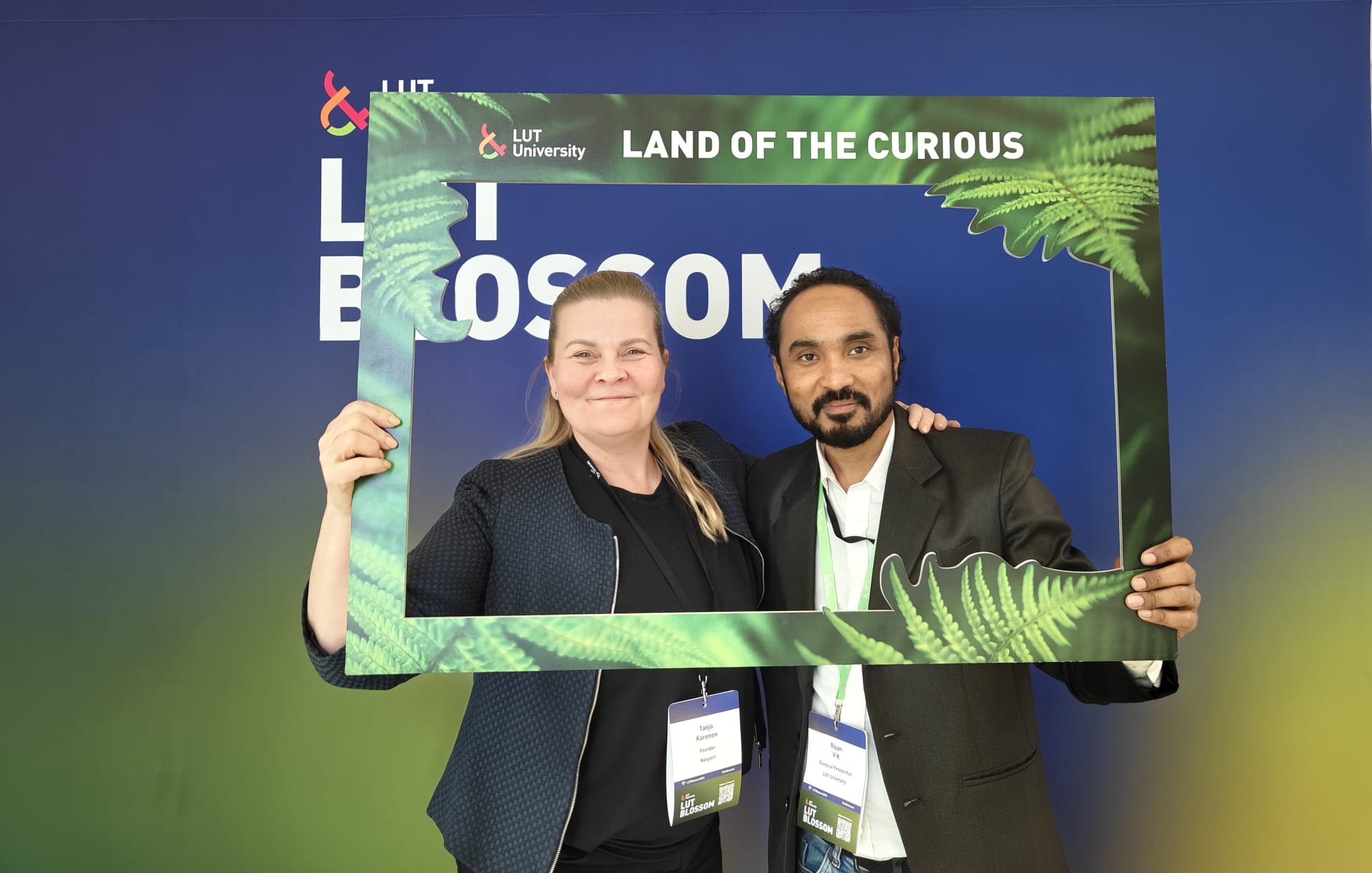
    Dr. Rajan Kumar V K brings research-based expertise in performance management, digital transformation, artificial intelligence, IoT, and digital twins to Nexpert’s network. His work focuses on how emerging technologies can support better decision-making, process development, and sustainable organizational performance.

  • AI needs strong foundations

    AI needs strong foundations

    Artificial intelligence has become a significant part of business development and decision-making. At the same time, many organizations are considering how AI can be practically utilized in a way that generates real business value and doesn't remain...

  • Case: An RDI Project for Building a Learning Organisation in Public Administration

    Case: An RDI Project for Building a Learning Organisation in Public Administration

    In a state administration organization, a situation was identified that is familiar to many large expert organizations: feedback, observations, and development ideas continuously come from many directions, but the learning generated from them does not necessarily get shared...

Recent Comments

  • One View for the Entire Quality Assurance Process

    How the self-handover of road and railway design was harmonized Tanja Karonen Road and railway design is a long, multi-stage, and strictly regulated process. The design is guided by EU regulations, national legislation, the Finnish Transport Infrastructure Agency's Technical and Safety Guidelines, as well as the RTJJ, the Safety Management System for Railway Actors, and the TPJJ, the Safety Management System for Road Maintenance. A design project lasts several years; for the largest projects, the entire lifecycle of design and implementation can stretch up to twenty years. Along the way...

  • Digital twins supporting decision-making

    Dr. Rajan Kumar V K brings to Nexpert's network research-based expertise in performance management, digital transformation, artificial intelligence, IoT, and digital twins. His work focuses on how new technologies can support better decision-making, process development, and sustainable performance in organizations. A digital twin is not just a technical model or visualization tool. It can act as a practical instrument that connects physical operations, real-time...

  • AI needs strong foundations

    Artificial intelligence has become a significant part of corporate development and decision-making. At the same time, many organizations are considering how AI can be utilized in practice in a way that generates real business value rather than remaining an isolated experiment. In Finamia Oy's work, this is particularly visible in the everyday life of SMEs. In many growth-stage companies, financial data is indeed collected, but it is not yet effectively utilized in business management or strategic decision-making. One thing stands out...

  • Case: An RDI Project for Building a Learning Organisation in Public Administration

    In the central government organization, a situation familiar to many large expert organizations was identified: feedback, observations, and development ideas are constantly coming from many directions, but the lessons learned from them are not necessarily shared for the benefit of the entire organization. The feedback is processed, but the lessons learned from it often remained confined to a single project, department, team, or unit, and people do not remember, have the time, understand, or know how to share them with others.