
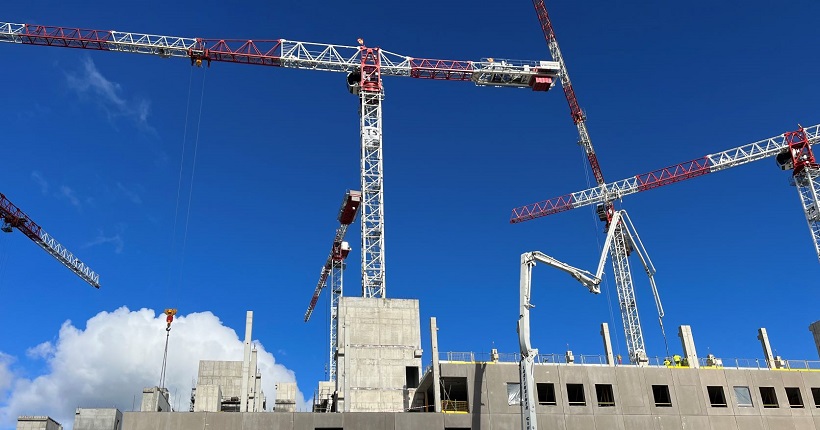
Finland's overshoot day was April 1, 2026. I was on a construction site where over ten million kilograms of iron were used in concrete reinforcement, and this is an example story of a situation that is unfortunately familiar in subcontracting.
The rebar workers had finished their part. The inspection was done. After that, the formworkers came and noticed that some of the rebar were preventing the anchor bolts from being installed. The end result was that the rebar were cut with an angle grinder and later re-tied. Completely useless work and it could have been entirely avoided with a little discussion.
This wasn't an isolated error, but a rather typical situation regardless of the work phase. The work phases are done sequentially, but they don't actually connect. The rebar installers do their part, and the formwork follows. The plans guide the work, but the coordination of the next work phase hasn't been sufficiently considered. No one stops to look at the whole picture before it's too late. From an employee's perspective, this is demotivating. The same work is done twice. From an employer's perspective, this is a direct cost and entirely preventable.
In my opinion, this is massive overconsumption, completely unnecessary. It's waste generated in daily operations that could have been avoided with better coordination, reception of work, work planning, or or or... It brings to mind a domino effect, where each step of the quality control process was skipped, and the final result is then done twice.
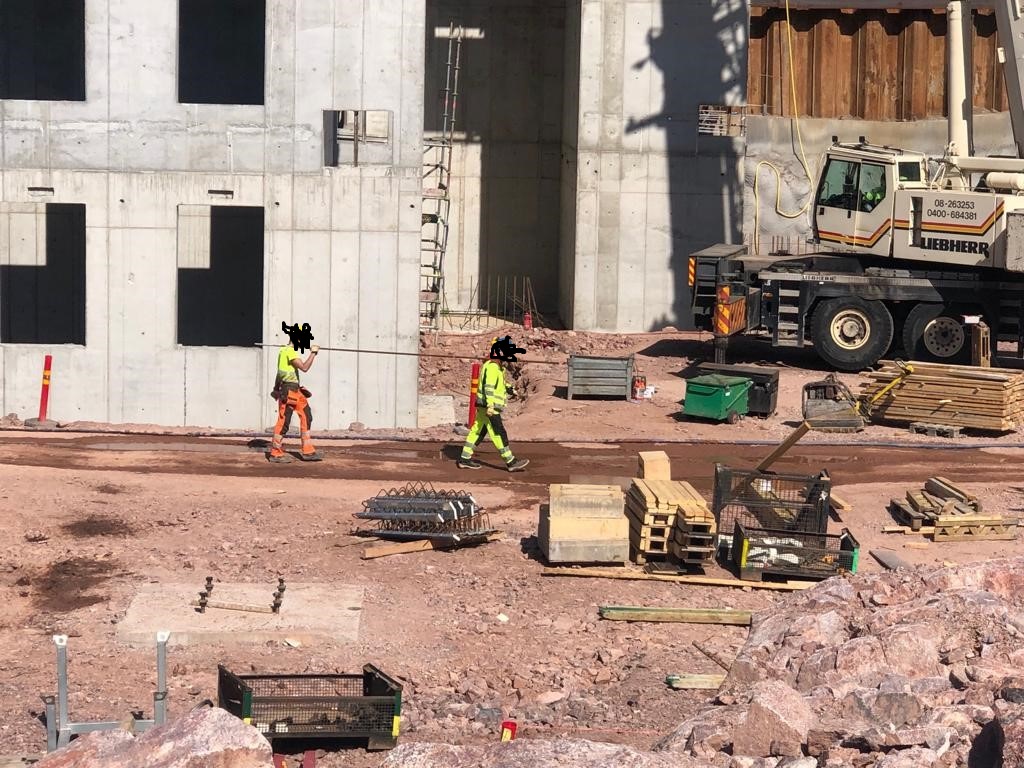
In the construction industry, expertise is largely gained through hands-on work. Previously, the master-apprentice model was favored, where an experienced veteran taught a younger person, thus avoiding repeated mistakes. Apprenticeship typically began at a young age, often before turning 18. Nowadays, few contractors take on under-18s on construction sites. It's a safety issue.
On the other hand, the Finnish vocational education reform that came into effect in 2018 ensured that employers' role significantly increased as providers of education. The reform focused on competence-based learning and on-the-job training. Reinforcement work, like many other tasks requiring specific expertise, is minimized within the basic degree for a construction worker, currently accounting for 2–5 out of 180 competence points. True professional skill is developed on the construction site over years. This directly explains why reinforcement sites currently have many Poles, Ukrainians, and in the future, Filipinos, Chinese, and Indians. Finnish education does not prepare individuals for these jobs on a construction site.
Regardless of nationality, work is done in individual silos, one work phase at a time. The plan is not questioned, and there is no clear moment where different work phases actually meet.
No, back to this story. The construction site was extensive, with approximately 10 work crews at different points constantly. Site management continuously updated the situation on a Kanban board in the site office, showing how many rebar workers were at each location and where more were needed. How many lifts were scheduled, when loads were arriving, and who was unloading. And so on. We ended up creating a physical poster for Kanban with Post-it notes because digital tools were found to be cumbersome in site conditions. And yes – they can be at times. We decided to listen to the employees. It didn't work in the absolute best way, but it was a start. The first round of many continuous improvement rounds. Two-way radios were not allowed on this site – cranes and a few other operators had reserved the open channels, so phones were used for support. And then, of course, your feet. Walking from one end of the site to the other took over 10 minutes, so it wasn't the fastest way to convey information, but sometimes it had to be done if there was no phone signal.
This was a time before vibe-coding. AI tools have opened up a whole new field for building lightweight solutions, even for individual job sites. If it's not confidential information, I would now create a lightweight application for these purposes. This could be, for example, site blocks or building floors, team 1, team 2, rebar load, paint load, demolition site 1, demolition site 2, etc. An app or website on their phones for all employees, from which they can see a Kanban board that can also be easily updated.
Anyone can make these tools even without coding skills, for example, with Claude cowork or OpenClaw. YouTube is full of tutorials.
Or you can order from us.




Leave a Reply