

Key Takeaways
- Around 70–80% of client communication is repetitive and can be automated without losing personalization.
- AI automation improves speed, accuracy, and consistency while freeing teams to focus on high‑value conversations.
- Identifying the right workflows—like inquiries, updates, and reminders—ensures quick wins.
- Human‑centric automation requires context awareness, tone matching, and emotional intelligence.
- A range of tools, from CRM integrations to AI‑powered platforms, can support automation across project stages.
Key Benefits of Communication Automation
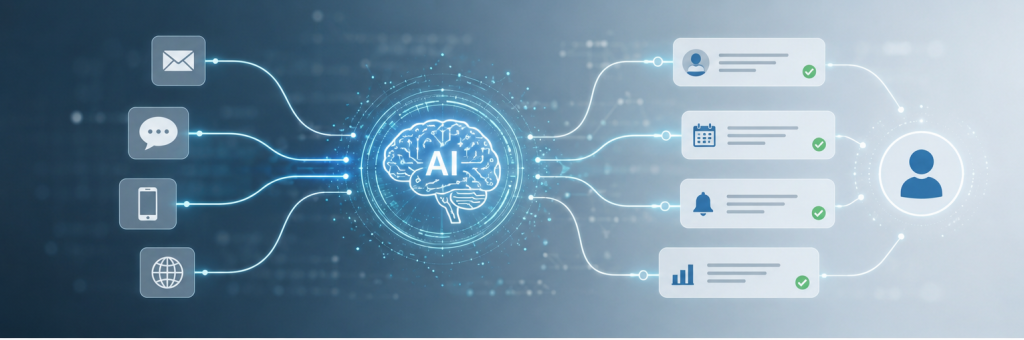
Most client communication — status updates, appointment confirmations, follow‑ups, and FAQs — follows predictable patterns. Automating these tasks saves hours of manual work each week and ensures clients receive timely, consistent responses.
Key benefits include:
- Faster response times: AI can reply to inquiries within seconds, dramatically improving lead conversion.
- Consistency and accuracy: Automated updates pull directly from project data, reducing human error.
- Improved client satisfaction: Clients feel supported with proactive updates and reminders.
- SkaalautuvuusScalability</strong: Teams can manage more clients without increasing administrative workload.
- Retention and referrals: Automated check‑ins encourage reviews and repeat business.
How to Identify the Need to Automate Communication
The first step is auditing your outbound communication. If most of your team’s time is spent on repetitive messages — like confirming appointments or sending project updates — it’s a clear sign automation can help.
Indicators that communication is ready for automation:
- High frequency of similar messages.
- Delays in response times leading to client frustration.
- Manual errors or inconsistencies in updates.
- Missed follow‑ups or forgotten check‑ins.
Automation should start with workflows that are repetitive, rule‑based, and time‑sensitive. More complex, judgment‑heavy interactions should remain human‑led.
How to Create Human‑Centric and Automated Communications
One of the biggest risks in automation is sounding robotic. Modern AI avoids this by using context, tone, and emotional intelligence.
Human‑centric automation requires:
- Context awareness: AI references past conversations, project details, and client preferences.
- Voice matching: Training the AI on your brand’s tone ensures messages sound authentic.
- Dynamic content: Instead of templates, AI generates unique responses tailored to each situation.
- Emotional intelligence: Tone adjusts based on client sentiment — acknowledging frustration or celebrating milestones.
- Appropriate imperfection: Natural variations in phrasing make communication feel human.
By blending automation with empathy, businesses can maintain trust while scaling communication.
This article was written with the assistance of artificial intelligence as part of an internship project




Leave a Reply