The True Cost of AI: Tokens, Credits, and the New AI Economy
TK
Tanja Karonen
Nexpert
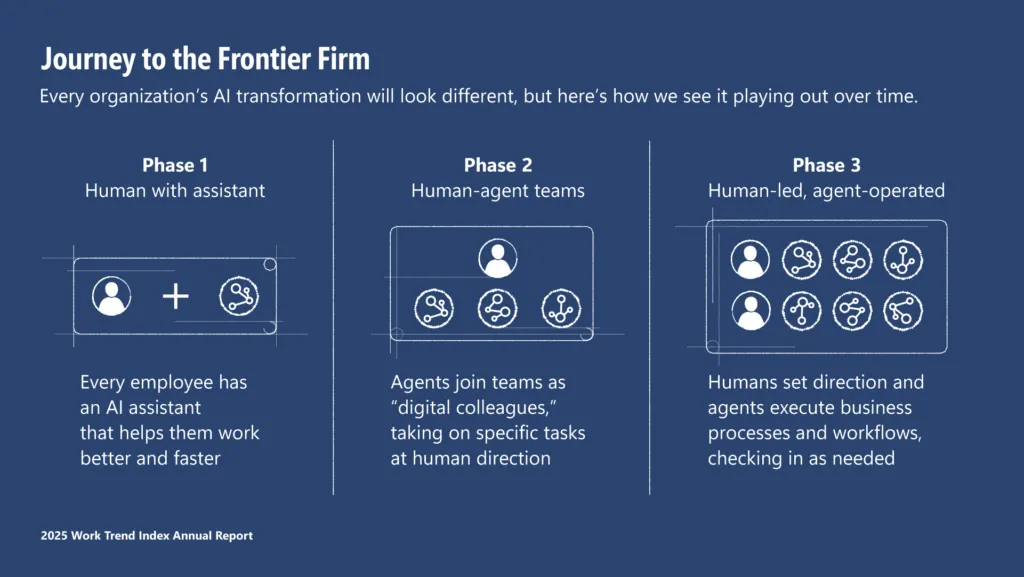
The rapid development of artificial intelligence has presented organizations with a new kind of challenge. Until recently, it was enough to provide employees with access to large language models such as ChatGPT or Perplexity. Now, however, we are rapidly moving from individual AI usage toward autonomous agent teams and broader workflows.
This transition from ”Phase 1 to Phase 2” brings not only a huge leap in productivity, but also a completely new cost structure. As AI starts working independently in the background, the traditional ”seat-based pricing” no longer works as the sole business model for AI companies. For your organization to succeed in this new era and successfully take AI pilots into production, it is crucial to understand the new economics of AI consumption: tokens, credits, and different pricing tiers.
In this article, we unlock the secrets of AI pricing and introduce a model that helps you understand the different tiers of the AI market – all the way from cloud services to the application level.
🛑 Video challenge: Was I wrong about the price increases?
In the video I published, I made a strong claim that the price of artificial intelligence will rise next year. I justified this by the fact that the current €20/month fixed monthly fees are unprofitable for service providers under heavy use.
But when we delve into the latest market data, my claim about price increases turns out to be wrong – and that’s the best possible news for your company! The price of tokens—the raw material of AI—is in free fall (a drop of up to 99 % in three years). In this blog post, I challenge the claim made in my own video and show why AI isn’t actually becoming more expensive, but rather its pricing logic is changing. Read below to find out what this ”AI deflation” is all about.
1. What are tokens and credits?
The pricing of artificial intelligence services is based on two terms that may sound like synonyms, but in practice mean different things.
Tokens – The atoms of AI
Large language models (such as GPT-4 or Claude 3) do not process text as words, but as tokens (as words or strings).
One English token is roughly equivalent to about four characters or three/four words. For example, a 1,000-word English text consumes about 1,300 tokens.
A special feature of the Finnish language: Because the Finnish language is morphologically rich and words are often long and inflected, Finnish text is broken down into significantly more tokens than English. A single Finnish word can take up multiple tokens, which makes raw Finnish AI processing more expensive and resource-intensive than English.
Credits – Application-level currency
Because direct token-based pricing is difficult for the end user to grasp and unstable, many SaaS applications translate technical consumption credits.
* Kreditti is an abstraction model on top of AI consumption. It works as an in-app currency.
For example, an application can specify that 1 credit corresponds to one generated AI image, 5 minutes of transcribed audio, or 10,000 text-processing tokens. This clarifies pricing and allows software developers to protect their own margins while giving the user a more predictable consumption model.
2. How do tokens behave in AI usage?
The consumption behavior of artificial intelligence differs radically from traditional software usage. In traditional SaaS services, the number of usages generally does not significantly increase the software vendor's variable costs. In AI, every click and every line of code running in the background triggers a meter.
Inputs vs. Outputs
Language models are priced separately based on the input text (input/prompt) and the output text. Generating output text requires more computing power from the model, so it is typically 3 to 4 times more expensive per million tokens than reading input.
Cumulative growth of the context window
When you use AI in a chat format, it is not a series of independent questions. In order for the AI to remember what happened in the conversation five minutes ago, with every new question, the language model is sent restart entire conversation history. This means that in a long conversation, token consumption increases cumulatively, not linearly. The tenth message of the conversation costs many times more compared to the first!
Agents and autonomous loops multiply consumption
When moving from simple text generation to AI agents or automated software development (e.g., coding and application development platforms), the AI performs multiple searches, correction loops, and code tests in the background before giving you the final answer.
A practical example from Nexpert's daily operations: We extensively use tools like ChatGPT Pro, which has a fixed price of about €20/month. During a two-day intensive development period, it allowed us to redesign an entire Notion architecture from scratch and build a new quality assurance application alongside GitHub and the Lovable development platform.
Although the end result was extremely valuable for our company, from OpenAI's perspective we were an ”unprofitable customer.” In two days, we consumed many times more tokens and server capacity than what our 20-euro monthly fee covered.
This leads us directly to the biggest disruption in the AI market and the four different tiers of pricing.
3. The Four Pricing Layers of the AI Economy
The architecture of artificial intelligence technology and its distribution has created a complex value chain. In business and IT architecture design, it is important to understand that the AI economy is not a monolithic field, but is divided into four different pricing tiers, each of which has its own rules, pricing logic, and risks.
┌──────────────────────────────────────────────────────────┐
│  Layer 4: APPLICATION LAYER AND EMBEDDED AI (SaaS / UI)    │
│  • Credits, task-/performance-based (e.g., Lovable)  │
└────────────────────────────┬─────────────────────────────┘
                             │ (Uses the cloud/API layer)
┌────────────────────────────▼─────────────────────────────┐
│  Tier 3: MONTHLY SUBSCRIPTIONS (Subscriptions)  │
│  • Fixed monthly fee for consumers/pro users (Copilot)│
└────────────────────────────┬─────────────────────────────┘
                             │ (Restrictions and "fair use" limits)
┌────────────────────────────▼─────────────────────────────┐
│  Layer 2: DIRECT API INTERFACES (Direct Model APIs)     │
│  • Token-based (Input/Output), highly deflationary │
└────────────────────────────┬─────────────────────────────┘
                             │ (Integrates with cloud infrastructure)
┌────────────────────────────▼─────────────────────────────┐
│  Layer 1: ENTERPRISE-LEVEL LLM PLATFORMS FOR CLOUD SERVICES      │
│  • Enterprise Cloud (Azure, AWS Bedrock, Vertex AI)      │
└──────────────────────────────────────────────────────────┘
Tier 1: Enterprise Cloud Providers' LLM Platforms
For large organizations and public administration, information security, compliance (such as GDPR compliance and data storage within the EU), and service level agreements (SLAs) are critical. For this reason, models are often not run directly from the model providers' own APIs, but rather hyperscalers' enterprise clouds via (like Microsoft Azure OpenAI, AWS Bedrock or Google Cloud Vertex AI).
Pricing logic: In cloud services, AI consumption ties into the company's existing cloud capacity and agreements (committed spend or pay-as-you-go). Consumption is typically still measured in tokens, but maintenance costs for cloud infrastructure, security layers, and private networks are billed on top of that.
Benefits: The company owns its data, the prompt history is not used to train the models, and costs can be managed as part of the broader IT budget.
Floor 2: Direct Model APIs
This is the developers' own API for AI model developers (such as OpenAI, Anthropic, Google, or providers offering open-source models). The API layer is highly competitive, dynamic, and strongly deflationary - raw token prices are steadily decreasing as model efficiency improves.
Pricing logic: Pure pay-as-you-go pricing per million tokens (separately for Input and Output). For example, OpenAI significantly lowered the API prices for the GPT-5.6 Luna and Terra models (by up to 80 %) just weeks after launch to respond to competitive pressure.
Application: Custom software development projects, building proprietary applications, and integrations where you want to pay only for actual usage without middlemen.
Floor 3: Flat-rate consumer and professional subscription agreements
This is the layer most are familiar with: services such as ChatGPT Plus/Pro, GitHub Copilot, Claude or Perplexity, where the user pays a fixed monthly fee (e.g., approx. €20/month).
Pricing logic: A monthly subscription with unlimited or extremely high ”fair-use” limits. As noted in the video, heavy expert users consume tokens many times more than what the monthly fee covers, making them unprofitable customers for service providers.
Future outlook: Although raw token prices are falling, due to pressure from investors, it is expected that Over the coming year, these unlimited models will transition towards stricter usage limits or hybrid models., where the base fee includes a fixed pool of tokens/credits, and usage exceeding that is billed separately. However, this does not mean an explosive rise in costs, as the savings trickle down to the end user.
Layer 4: Application Layer & Embedded AI
This layer consists of SaaS software with built-in AI integrated into the workflow (e.g.,. Salesforce Agentforce, HubSpot, Adobe Firefly or no-code development platforms such as Lovable and Notion AI).
Pricing logic: Applications bundle the underlying complex token and API costs into more easily understandable formats into credits, task-based completed assignments, or achieved business outcomes. For example, Salesforce bills through Agentforce for AI-powered customer conversations on a per-conversation basis (e.g., $2 per conversation).
Developer/seller perspective: At this layer, the software developer takes on the risk of raw API consumption and prices their own added value and user interface in the form of credits. For the enterprise customer, this brings predictability, but on the other hand, often also a higher unit price compared to direct API usage.
What do global experts say about the AI economy?
The changing consumption and cost model of artificial intelligence technology is currently at the center of attention for the world's leading research institutions and consultants. Here is a concise summary of how global experts describe this turning point:
Flexera (Tokens, credits and the new economics of AI consumption) points out in their analysis how traditional user-based SaaS pricing is crumbling, as autonomous work performed by AI agents no longer correlates with employee log-ins. According to Flexera, we are transitioning into a ”new micro-economy of AI consumption,” where every click and automation loop must be measured individually.
McKinsey & Company (The new economics of AI) emphasizes in its leaders' guide that tracking raw token prices of AI is no longer sufficient to describe the actual costs. Companies must be able to manage and scale value by understanding the holistic cost structure of AI and its associated governance model.
Deloitte (How to Navigate the Economics of AI / The Pivot to Tokenomics) describes the market's transition to ”tokenomics.” Traditional IT budgeting models, such as TCO or static VM pricing, no longer work because AI costs scale non-linearly and turn into a dynamic expense resembling an electricity bill.
Boston Consulting Group (BCG) (Understanding the New Economics of AI Compute Markets) reminds that even though dynamic competition lowers the raw power of AI, deeper corporate commitments to private cloud platforms and customized LLM models create long and binding ”utility contracts.” They require active risk management and even futures hedging against cost volatility.
How does this affect your company's AI strategy?
When artificial intelligence is integrated into an organization's core processes, such as the automation of customer communication or reporting, cost predictability becomes a critical factor. If an employee or a background agent makes poorly optimized queries, the company's AI bill can multiply without warning.
Take these things into consideration now when planning your company's AI strategy:
Add the pricing risks to the risk matrix: When making plans for the implementation of artificial intelligence, also evaluate the cost structure through what happens if current fixed-price licenses change to usage-based ones. How does that affect the profitability of your projects?
Select the right model for the right task: Not everything requires the most expensive and smartest model. Routine, simple automations should be run with smaller and significantly cheaper ”Mini” models, keeping token costs at a fraction compared to top-tier models.
Monitor and optimize prompt engineering: Train your team to write concise and clear inputs. Unnecessary ”chat” and long background histories in chats cost money directly when moving to credit- and usage-based pricing.
👉 Are you interested in the topic more deeply? You can download the spreadsheet below, which you can use to plan your company's AI cost structure and strategic deployment.
Do you want to ensure that your organization's AI adoption happens not only efficiently, but also economically sustainably? Nexpert helps you design clear, practical, and business-driven AI solutions with employees in mind.
Book an appointment Let's put your organization's processes and AI on a strict budget!
Tanja Karonen is an entrepreneur and digital transformation expert whose expertise includes process development, project management, quality assurance, and leveraging artificial intelligence in business development. Through Nexpert, she helps organizations develop their processes, manage data, and adopt new technologies in a practical and human-centered way. Her background also includes public administration development projects, Lean thinking, and digital business.